


Trip at a glance
- Destination
- Iceland
Key tips
What I’d remember
When I went to Iceland in August 2023 with my friends David and Gabby, our five days covered a lot of different conditions: soaking in the Blue Lagoon, walking behind Seljalandsfoss in its spray, standing on the black sand at Reynisfjara, a boat ride among the icebergs at Jökulsárlón, a three-hour glacier hike on Sólheimajökull, and evenings that were still bright at 11:30 PM. Packing for all of that in one carry-on-friendly bag comes down to a few smart choices. Here’s what I’d pack for Iceland in summer, and what I’d leave at home.
Some links in this post are affiliate links, including Guide to Iceland, Viator and Amazon. If you book or buy through them, I may earn a small commission at no extra cost to you. I only link to things I’d use myself.
The short version
- Layers, not one big coat: base layer, fleece or light insulated jacket, waterproof and windproof shell.
- Waterproof everything on the outside: jacket, rain pants and shoes with good grip.
- A swimsuit: the Blue Lagoon and any other lagoon or pool.
- A sleep mask: summer nights barely get dark.
- Type C/F plug adapter: Iceland runs on 230V.
- A card, not cash: cards work almost everywhere.
Layers: the core of your Iceland bag
Summer in Iceland is mild, not warm. Average highs in July and August sit in the mid-50s °F (around 12–13 °C), and wind and spray make it feel colder, especially at the waterfalls, on the beach and on the ice. Layering lets you go from a bus seat to a glacier without carrying a ski jacket around all day.
- Base layer: a thin long-sleeve top in merino or synthetic (not cotton, which stays cold when wet).
- Mid layer: a fleece or a light insulated (down or synthetic) jacket.
- Outer layer: a waterproof, windproof shell with a hood. More on that below.
- Bottoms: comfortable hiking or travel pants. Jeans are miserable once they get wet.
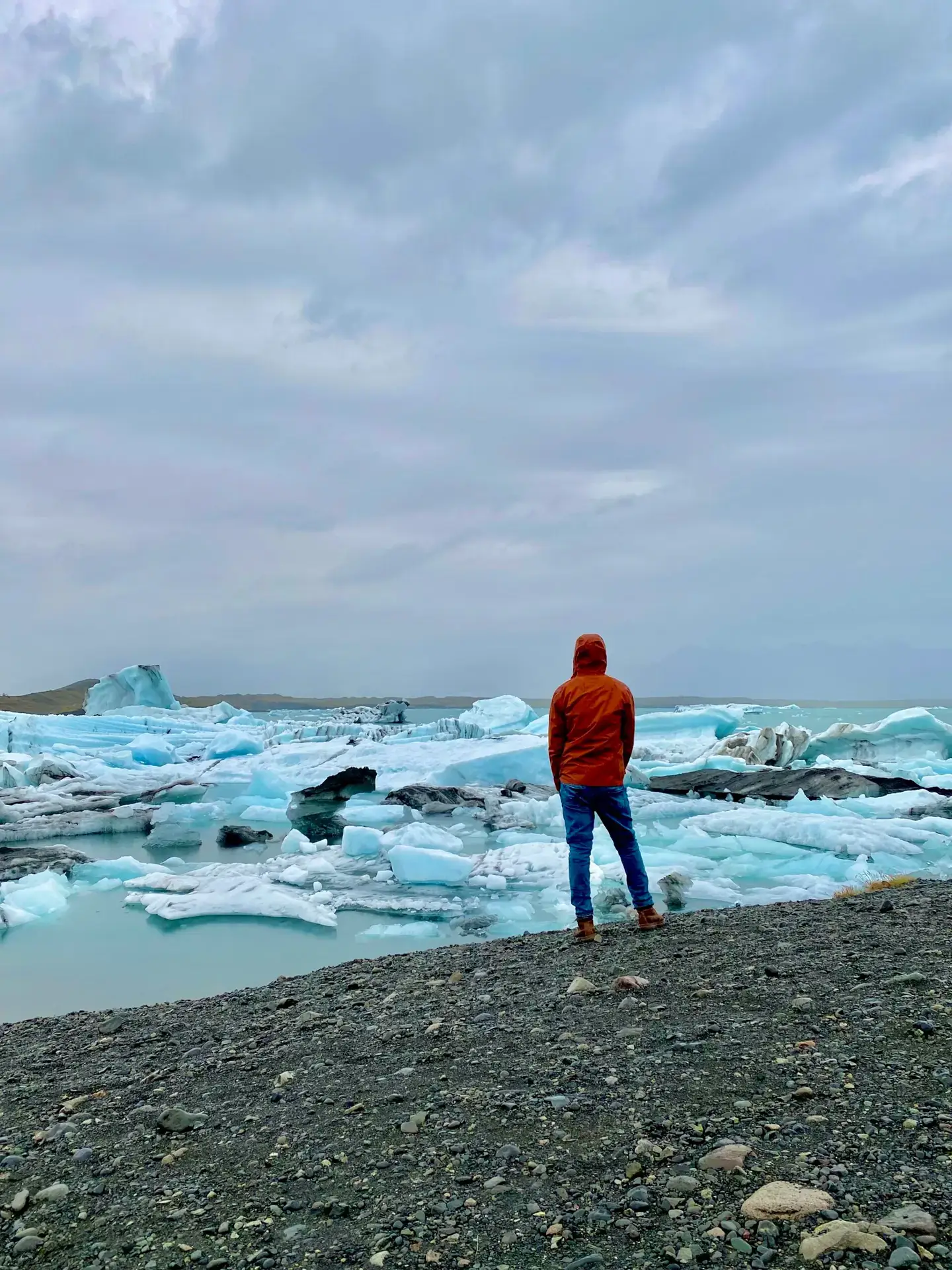
- Hat and gloves: light ones are enough in summer, and you’ll want them on the glacier and on the Jökulsárlón boat.
- Warm socks: a couple of pairs of wool hiking socks.
Rain gear: waterproof beats water-resistant
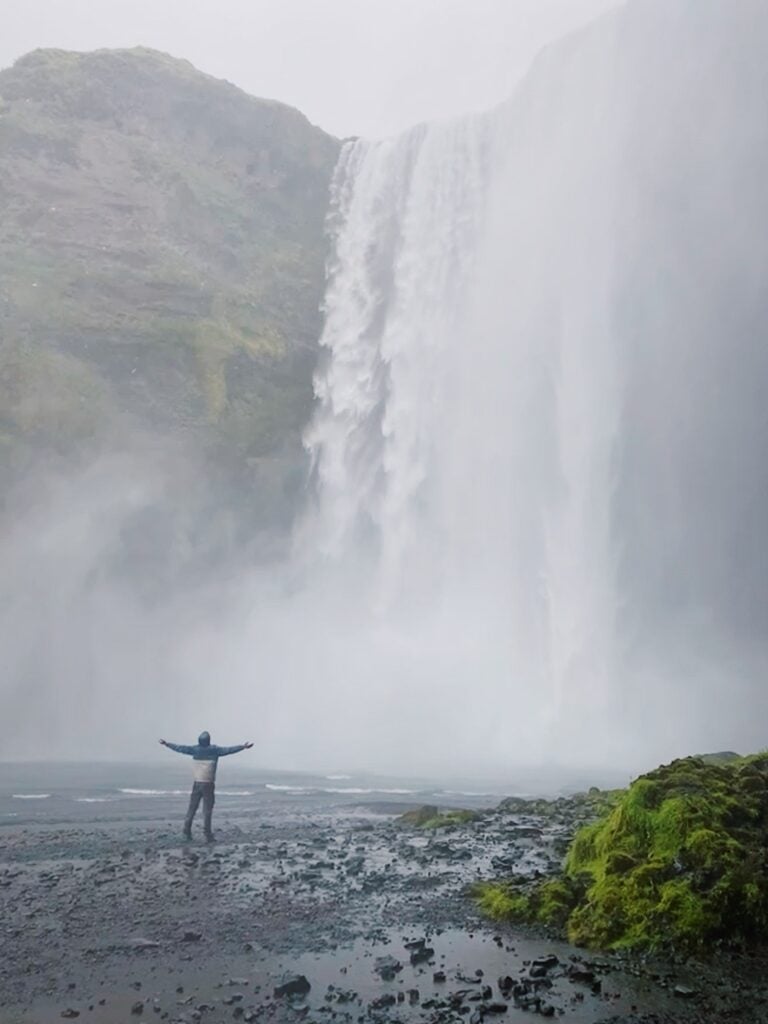
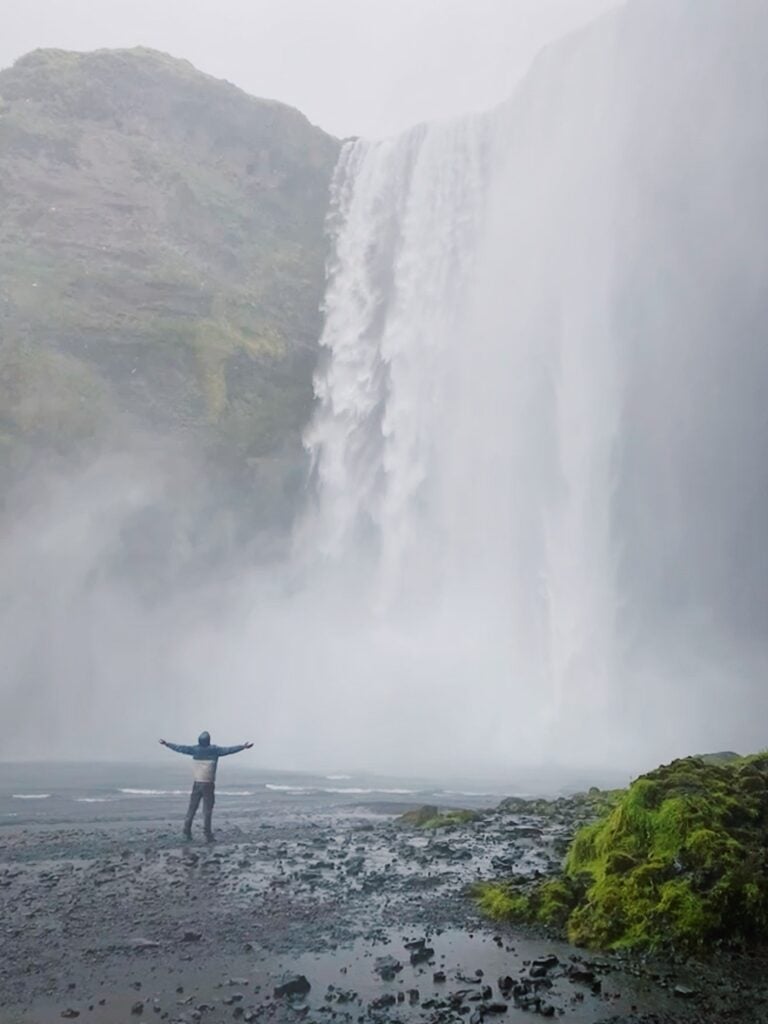
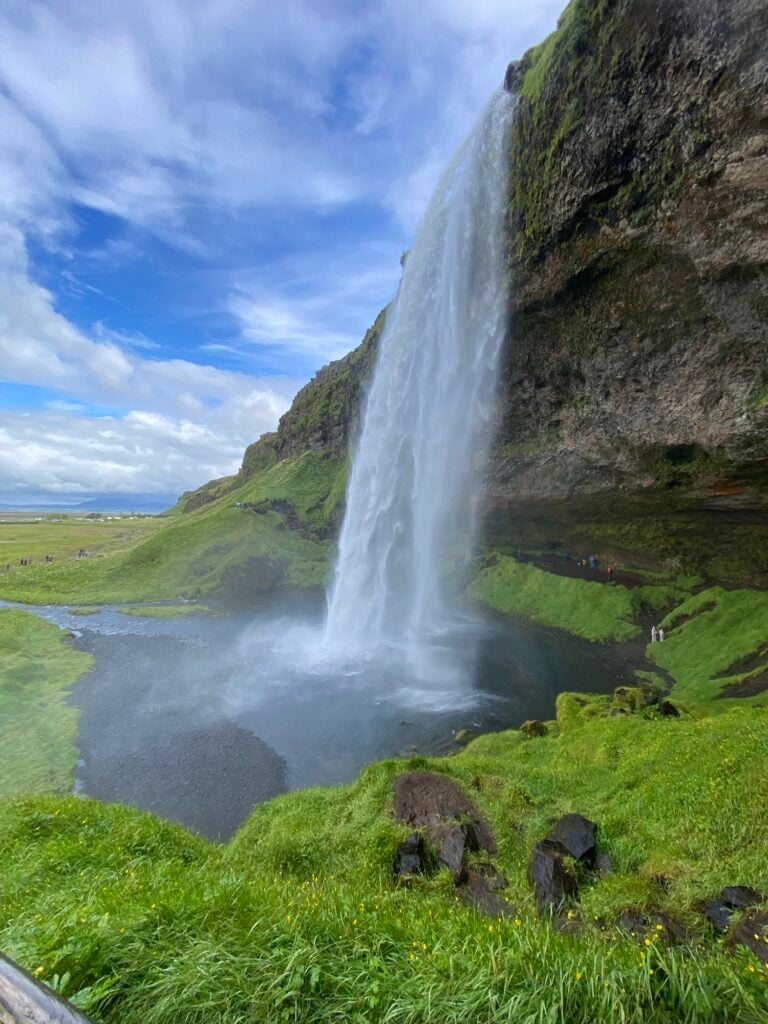
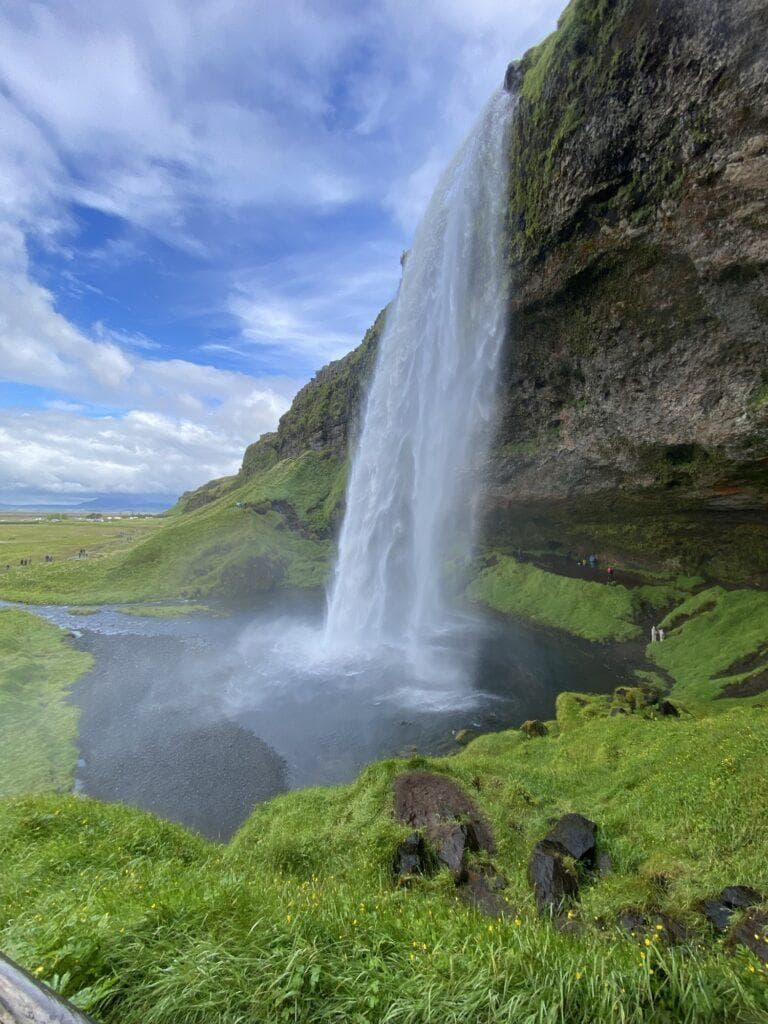
Even on a dry day, Iceland finds ways to get you wet. Walking behind Seljalandsfoss, like we did, means walking through its spray, and Skógafoss throws mist far across the field in front of it. Weather also changes fast, so check the forecast each morning.
- Waterproof jacket with a hood: the single most important thing in your bag.
- Rain pants: lightweight, packable over-trousers you can pull on before the waterfalls.
- Waterproof phone pouch: handy for photos near the falls and on the boat. I use this waterproof phone pouch (Amazon).
- Skip the umbrella: the wind makes it pointless.
Footwear
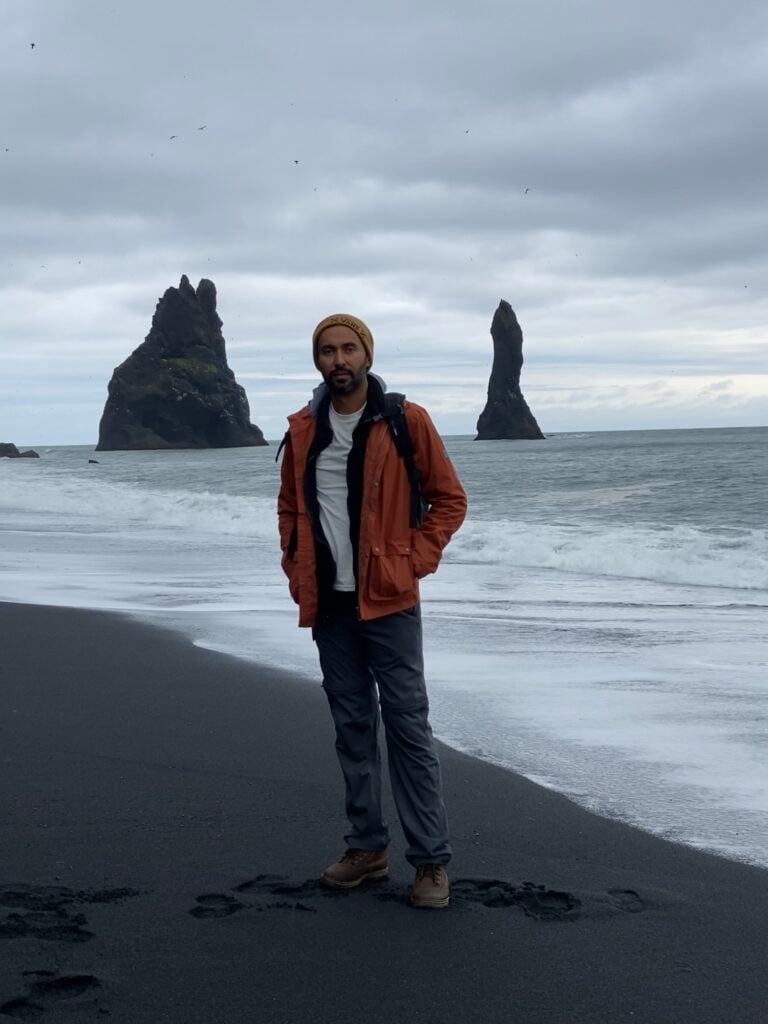
- Waterproof hiking shoes or boots with good grip: for wet paths behind the waterfalls, the stairs up Skógafoss and the black sand at Reynisfjara. Break them in before you go.
- Glacier hikes: sturdy ankle-supporting boots are best. Glacier tours provide the ice gear: on our Sólheimajökull hike we put on crampons, helmets and harnesses with our guide, so you don’t need to bring any. Check your tour’s footwear rules when you book.
- Something easy for the city and the lagoon: light sneakers or slides for Reykjavík evenings and the walk to the lagoon changing rooms.
Book it: See Sólheimajökull glacier hikes
Swimwear for the lagoons
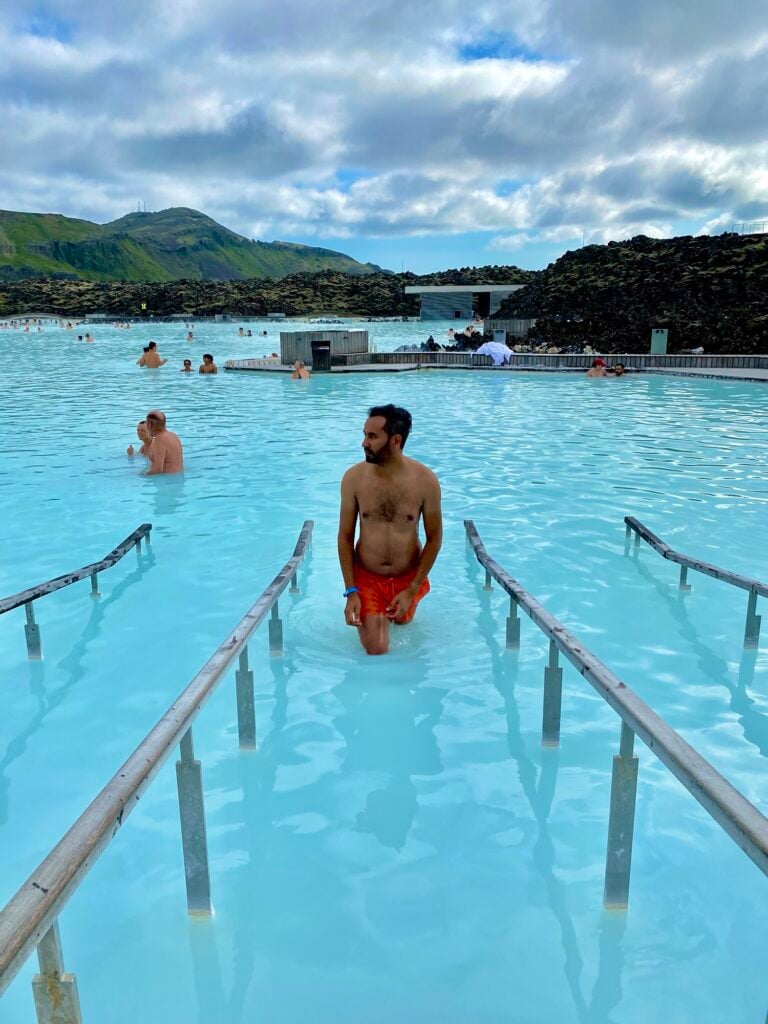
We spent a couple of hours in the Blue Lagoon on our arrival afternoon, and a swimsuit was the one thing everyone needed. Pack it near the top of your bag so you can grab it on arrival day.
- Swimsuit: a quick-drying one is easiest.
- Plastic or dry bag: for carrying it wet afterwards.
- Hair tie and conditioner: the geothermal water can leave long hair stiff, so tie it up and condition it well.
- Flip-flops (optional): nice to have for the changing rooms.
- Towel: check what your ticket includes before packing one. More detail in is the Blue Lagoon worth it?
Icelandic pools and lagoons ask you to shower without a swimsuit before you get in. It’s normal there, so don’t be surprised.
Book it: Blue Lagoon Comfort tickets (book ahead, it sells out)
A sleep mask for the midnight sun
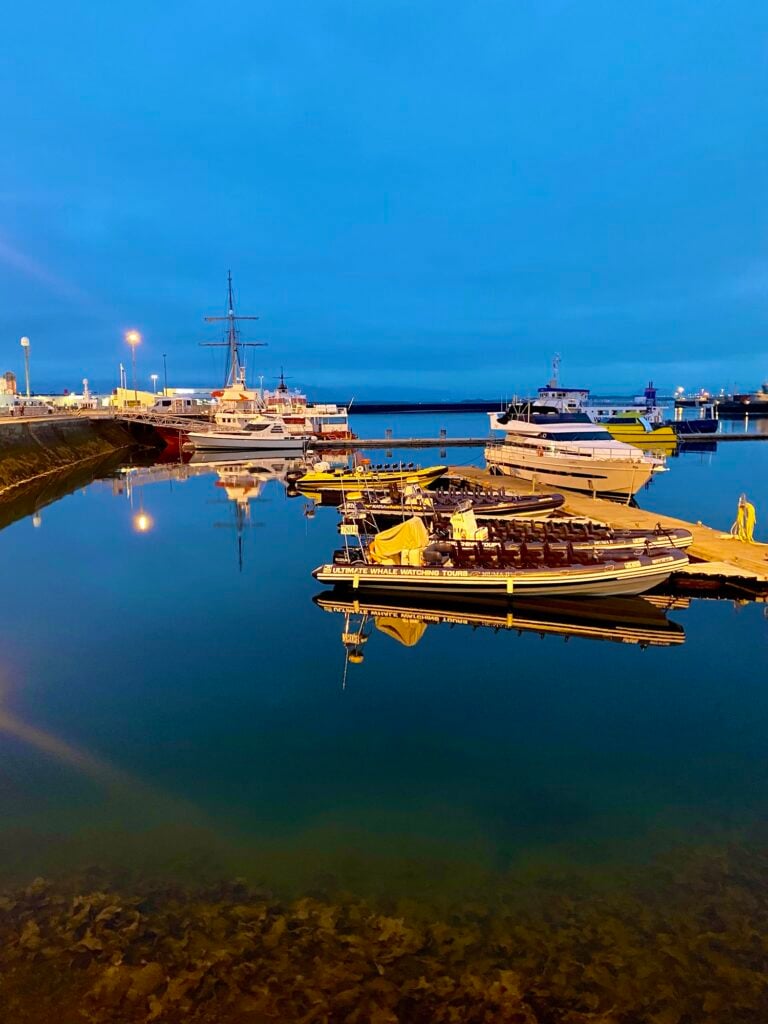
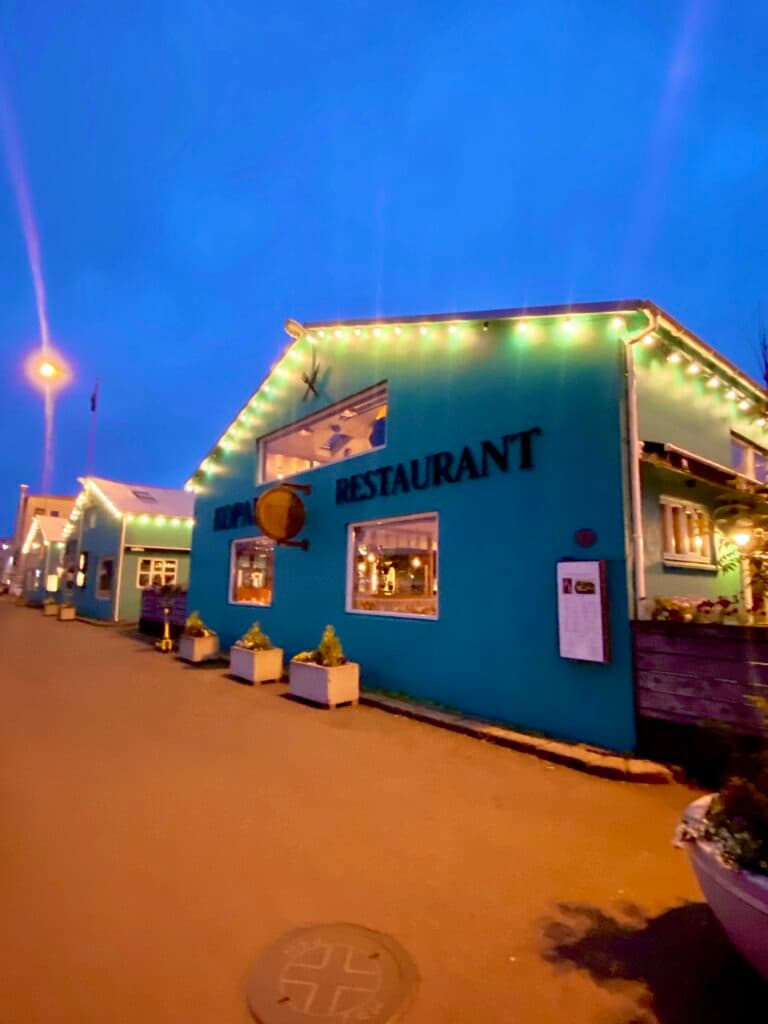
Even in August, it was still bright when we walked around Reykjavík’s old harbor at 11:30 PM. Around the June solstice it barely gets dark at all. Many hotel curtains don’t fully block the light, so a sleep mask makes a real difference to how rested you feel for early tour pickups.
- Sleep mask and earplugs: I travel with this sleep mask and earplug set (Amazon).
- Sunglasses: the low summer sun and the glare off the ice can be strong.
Adapters and tech
- Plug adapter: Iceland uses Type C and F plugs at 230V. Most phone and laptop chargers handle 230V, but check the label on anything else. A universal travel adapter (Amazon) covers Iceland and most other trips.
- Power bank: long days of photos drain your phone fast. A 10,000 mAh power bank (Amazon) is plenty for a day.
- Mobile data: an eSIM saves you hunting for Wi-Fi on tour buses. I use Saily.
- Offline maps: my Iceland map pack has every place from our trip pinned in Google Maps.
More tech ideas in my travel tech essentials.
Money
- Currency: Icelandic króna (ISK).
- Cards work almost everywhere, including small cafés and many gas stations, so you don’t need much cash, if any.
- Bring a card with no foreign transaction fees, and know your PIN, as some unattended gas pumps ask for one. I use the Wise card; here’s my Wise card review.
- Budget for it: Iceland is expensive. A sit-down dinner in Reykjavík easily runs $50+ per person (approximate, check current prices).
- Tipping isn’t expected, as service is included.
Documents and the ETIAS note
- Passport: Iceland is in the Schengen Area. Check that your passport is valid for at least three months beyond your departure date (and issued within the last 10 years).
- Visa: US citizens don’t need a visa for stays up to 90 days.
- ETIAS: Europe’s planned travel authorization for visa-free visitors, including to Iceland, is not in operation yet. As of October 2026 the EU has no confirmed start date and is not collecting applications, so ignore any site selling you one now. Check the official EU ETIAS site before you travel.
- Travel insurance: worth having for glacier hikes, boat tours and weather delays. I recommend World Nomads; here’s how I compare Allianz vs World Nomads.
- Driver’s license: if you plan to rent a car, like we did for our Golden Circle day.
- Bookings: confirmations for your package, tours and Blue Lagoon slot, saved offline.
Your day-bag list
On tour days we were out from morning until evening, often far from shops. This is what I’d carry in a small backpack:
- Waterproof jacket and rain pants
- Fleece or light insulated jacket
- Hat, gloves and sunglasses
- Refillable water bottle: Icelandic tap water is safe and very good. I use this insulated bottle (Amazon).
- Snacks: food stops on tour days can be pricey and far apart
- Power bank and charging cable
- Phone in a waterproof pouch
- Card and ID
- Swimsuit and a dry bag on lagoon days
What NOT to pack
- A heavy winter parka: in summer, layers do the job better.
- An umbrella: the wind wins every time.
- Cotton jeans and hoodies as your main outfit: cold and slow to dry once wet.
- Lots of cash: cards are accepted almost everywhere.
- Bottled water: drink from the tap instead.
- Crampons and ice gear: glacier tours provide them.
- Too many outfits: Reykjavík is relaxed, and you’ll live in your layers. Packing cubes keep it tidy: I use these compression packing cubes (Amazon). More in how I travel with minimal luggage.
Printable Iceland summer packing checklist
Print this page, or screenshot this list, and tick things off as you pack.
Clothing
- ☐ 2–3 base layer tops (merino or synthetic)
- ☐ Fleece or light insulated jacket
- ☐ Waterproof, windproof jacket with hood
- ☐ Rain pants
- ☐ 2 pairs of hiking or travel pants
- ☐ Warm hat and light gloves
- ☐ Wool socks
- ☐ Swimsuit
- ☐ Something casual for Reykjavík evenings
Footwear
- ☐ Waterproof hiking shoes or boots with good grip
- ☐ Light sneakers or slides
Gear and tech
- ☐ Type C/F plug adapter
- ☐ Power bank and cables
- ☐ Waterproof phone pouch
- ☐ Sleep mask and earplugs
- ☐ Sunglasses
- ☐ Refillable water bottle
- ☐ Small daypack and a dry bag
Documents and money
- ☐ Passport (valid 3+ months beyond departure)
- ☐ Card with no foreign transaction fees (and its PIN)
- ☐ Travel insurance details
- ☐ Driver’s license if renting a car
- ☐ Booking confirmations saved offline
Toiletries
- ☐ Conditioner and hair ties for the lagoon
- ☐ Moisturizer and lip balm (wind dries skin out)
- ☐ Sunscreen
- ☐ Any medication you need
Tours from this packing list
- The whole trip: Guide to Iceland’s 5-Day Summer Vacation Package. Here’s my honest review of the package.
- Jökulsárlón boat ride: See boat tours
- Sólheimajökull glacier hike: See glacier hikes
- Golden Circle: See Golden Circle tours
South coast day tours: waterfalls and Reynisfjara
If you’re not on a package, a day tour from Reykjavík covers Seljalandsfoss, Skógafoss and Reynisfjara, the wettest, windiest day of most trips, so dress for it:
Final thoughts
Pack for wind and water, not for deep cold. A good waterproof shell, waterproof shoes with grip, a warm mid layer, a swimsuit and a sleep mask covered everything our five summer days threw at us, from the Blue Lagoon to the glacier. Leave the parka and the umbrella at home. For the route itself, grab my free Iceland itinerary and the Iceland map pack, or read how our 5 days went.
FAQ
Do I need a winter coat for Iceland in summer?
No. A fleece or light insulated jacket under a waterproof, windproof shell is warmer and more flexible than one heavy coat.
What shoes should I wear in Iceland in summer?
Waterproof hiking shoes or boots with good grip. Paths near waterfalls and on black sand beaches get wet and slippery.
Do I need my own gear for a glacier hike?
Not ice gear. Guided tours provide it, and on our Sólheimajökull hike we used crampons, helmets and harnesses with our guide. Bring warm, waterproof layers and sturdy boots, and check your tour’s requirements.
What plug does Iceland use?
Type C and F, at 230V. Bring a Type C/F or universal adapter.
Do I need cash in Iceland?
Rarely. Cards are accepted almost everywhere, even for small amounts.
Do I need ETIAS for Iceland?
Not yet. As of October 2026, ETIAS is not operating and has no confirmed start date. Check the official EU ETIAS website before your trip.
Comments
Checking sign-in…
Loading comments…